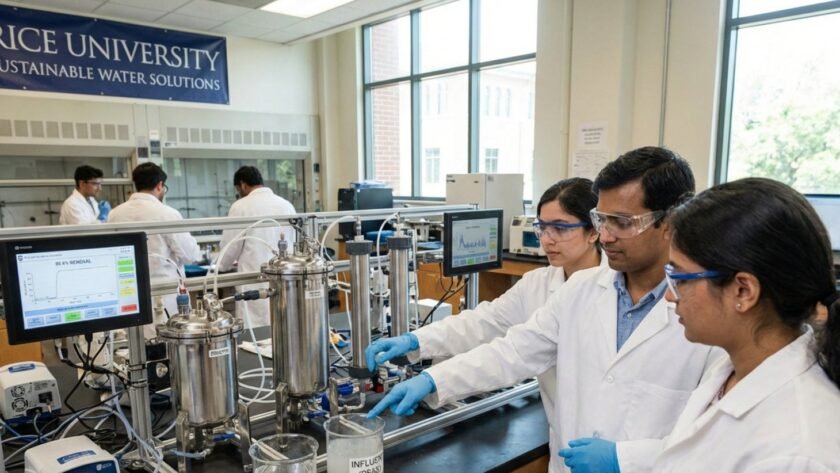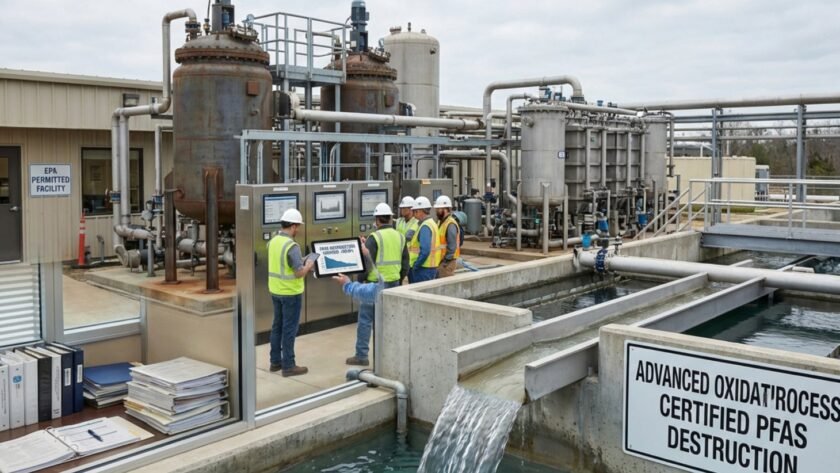
The global effort to address the persistent challenge of per- and polyfluoroalkyl substances (PFAS) has reached a pivotal moment. Breakthrough technology has now demonstrated the ability to achieve near-total destruction of PFAS at an industrial scale, fundamentally transforming the approach to environmental remediation and setting a new benchmark for sustainability across industries.
PFAS, often called…
New York Expands PFAS Response With Updated Guidance, Data, and Regulatory Frameworks
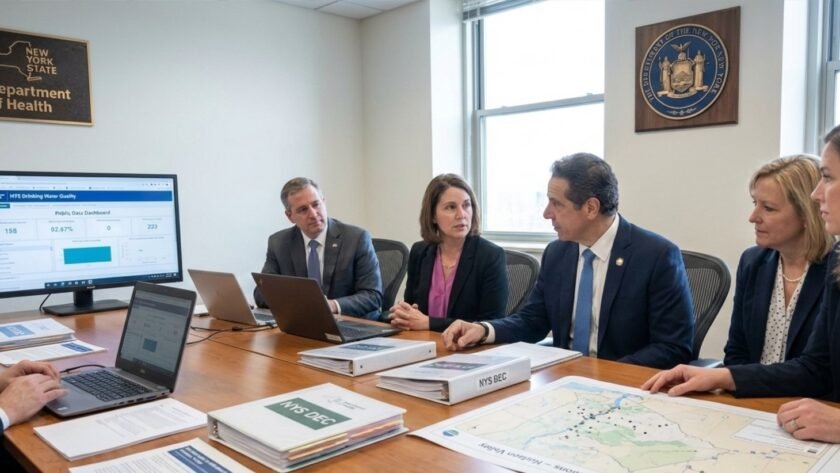
New York State has announced a comprehensive set of actions to strengthen its response to per- and polyfluoroalkyl substances (PFAS), reflecting more than a decade of regulatory development and scientific investigation into these persistent chemicals.
The Department of Environmental Conservation has released a…
Proposed EPA PFAS Reporting Changes Raise Questions as New Contamination Data Emerges in North Carolina
The U.S. Environmental Protection Agency is considering changes to how businesses report per- and polyfluoroalkyl substances (PFAS) under the Toxic Substances Control Act, a move that comes as new research suggests regulators may be missing significant sources of PFAS contamination.…
The Turning Point for Corporate Responsibility
PFAS, or per- and polyfluoroalkyl substances, are no longer just an environmental concern. They are a defining ESG and financial risk for global businesses. With over 15,000 synthetic compounds used across manufacturing, consumer goods, and industrial supply chains, PFAS contamination has become a global liability.
Governments, investors, and consumers…
Decoding the PFAS Remediation Imperative
PFAS, or per- and polyfluoroalkyl substances, present one of the most serious contamination challenges of the 21st century. These “forever chemicals” resist degradation, accumulate in soils, water, and organisms, and create growing regulatory, reputational, and financial risks for companies across sectors. As remediation demand accelerates, the key question for executives…
In two small Alabama towns, quiet streets bear the weight of 54 cancer cases and 14 incidents of kidney failure. A military family has endured devastating illnesses. A century-old dairy farm in Maine has shuttered after PFAS contamination rendered its milk unsafe.
These stories are not isolated tragedies. They represent a systemic failure that has…
A new study from Southern California has revealed something subtle but significant. Adults who drank from public water systems with even small traces of PFAS, often called “forever chemicals,” showed higher levels of these substances in their blood.
The finding is a reminder that PFAS contamination is not limited to polluted industrial regions. It’s everywhere,…