Eastern Canada Unlocks New Carbon Storage Potential for Scalable CCUS Deployment
Eastern Canada is rapidly positioning itself as a critical player in the global decarbonization landscape. A newly released geological carbon storage atlas delivers a comprehensive and integrated assessment of carbon dioxide (CO₂) storage potential across Québec and Atlantic Canada-marking a significant advancement in carbon…
The strategic narrative for Carbon Capture, Utilization, and Storage (CCUS) has officially moved beyond corporate social responsibility. In 2026, the mandate for leadership is the conversion of carbon liabilities into bankable assets. In the United States, the enhancement of the 45Q tax credit under the Inflation Reduction Act has redefined the economics of heavy industry.…
A Policy Signal with Mixed Market Interpretation
India’s $2.4 billion carbon credit programme announced in the Union Budget 2026–27 has triggered significant debate across industry and policy circles.
At its core, the initiative is aligned with Carbon Capture, Utilisation and Storage (CCUS) for industrial decarbonisation. However, the terminology has created broader expectations around agriculture-led carbon…
The European Commission recently signaled a decisive shift in its approach to maritime sustainability. On Wednesday, March 4, 2026, as part of a comprehensive new maritime and ports strategy, the Commission announced it will leverage the sale of 20 million EU Emissions Trading System (ETS) allowances to fund the sector’s transition. These proceeds, managed under…
Canada has positioned Carbon Capture, Utilization, and Storage (CCUS) at the epicenter of its industrial climate policy. The objective is clear: decouple economic productivity from emissions in “hard-to-abate” sectors. By formalizing the CCUS Investment Tax Credit (ITC) into law, Ottawa has transitioned from conceptual targets to a concrete financial framework designed to de-risk multi-billion-dollar capital…
Why India’s carbon capture strategy could redefine industrial competitiveness worldwide
India’s $2.4 billion commitment to Carbon Capture, Utilisation and Storage (CCUS) is not merely a climate policy decision-it is a calculated move in the emerging geopolitics of carbon, trade, and industrial resilience.
As carbon intensity becomes a decisive factor in global market access, India is…
CCUS in 2026: From Pilot Projects to a Scalable Decarbonization Engine
As governments and corporations intensify efforts to meet net-zero targets, Carbon Capture, Utilization and Storage (CCUS) is moving decisively from the margins of climate strategy toward the centre of industrial decarbonization. For sectors such as cement, steel, chemicals, refining, and power generation-where emissions are…
Carbon capture is no longer an experimental climate lever. In 2026, it has become a core pillar of credible net-zero strategies, particularly for sectors where emissions cannot be eliminated through electrification or efficiency alone.
For CEOs, board members, and investors, the conversation has shifted from whether carbon capture matters to who will deliver it at…
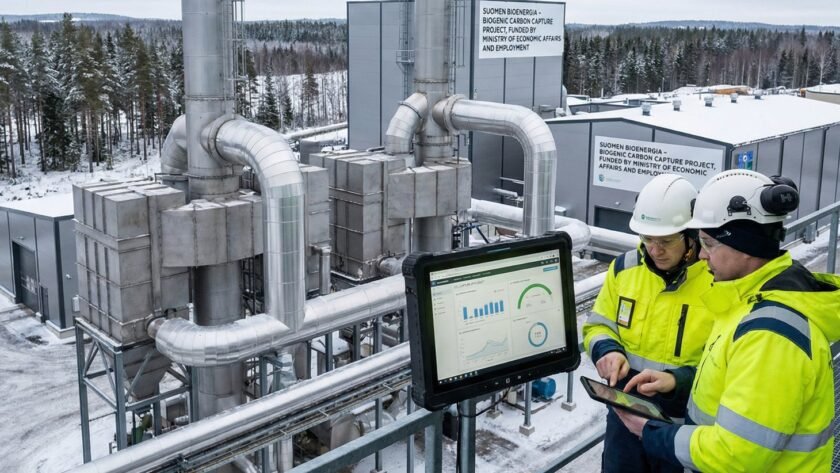
January 12, 2026 – Finland is taking a decisive step to position itself at the forefront of industrial-scale carbon removal with the launch of a EUR 90 million investment aid program for biogenic carbon capture projects. Open for applications until 31 March 2026, this initiative signals a new era of strategic, market-driven decarbonization with potential…
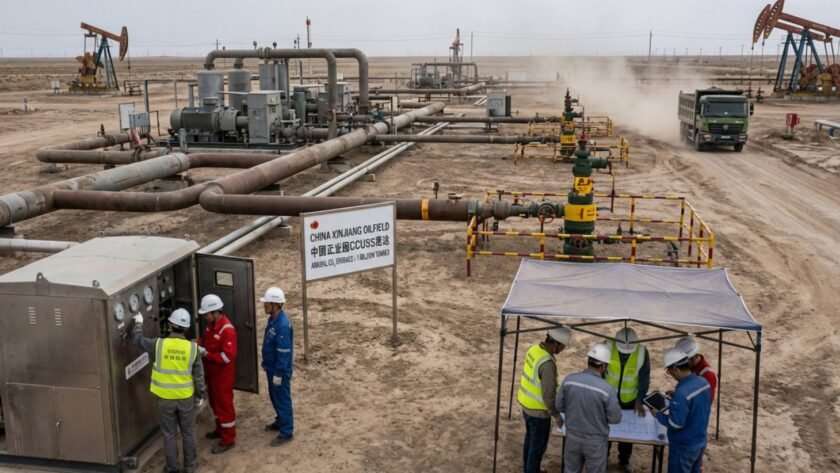
China’s Xinjiang Oilfield has surpassed one million tonnes of annual carbon dioxide (CO₂) storage, marking a decisive breakthrough in the industrial-scale deployment of carbon capture, utilization and storage (CCUS) technologies.
The achievement positions Xinjiang Oilfield-one of China’s most significant oil production bases-as a national leader in integrating emissions reduction with energy production at scale.
For…
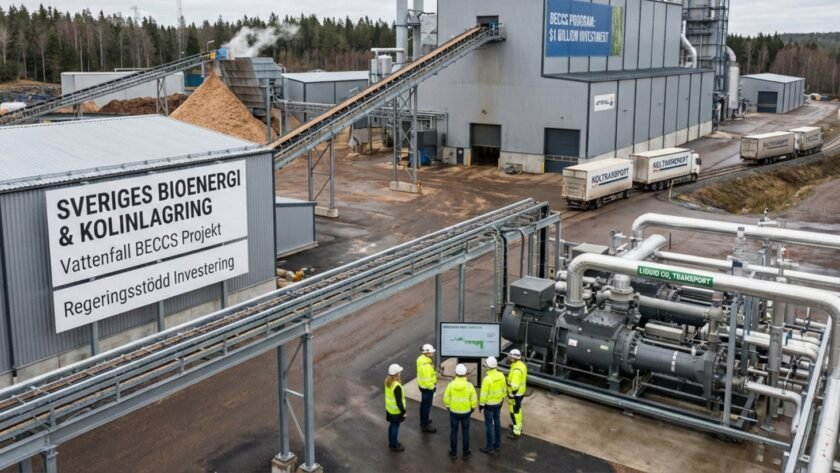
Sweden has taken a decisive step toward shaping the future of sustainable industry with a new $1 billion funding program designed to boost bioenergy with carbon capture and storage (BECCS). The initiative signals a bold commitment to industrial decarbonization and reinforces Sweden’s long-term climate vision-achieving net-zero emissions by 2045 and moving toward a carbon-negative economy thereafter.
Announced by…