
Breakthrough PFAS Water Filter Technology Achieves 98% Removal Efficiency, Advancing Global Remediation Efforts
A significant advancement in water treatment technology is emerging from Flinders University, where researchers have developed a next-generation filtration system capable of removing up to 98% of toxic PFAS contaminants from water.
For industry leaders in environmental technology, utilities, and infrastructure, this development represents a potential step-change in addressing one of the most persistent and complex contamination challenges worldwide.
PFAS Contamination Becomes a Strategic Global Risk
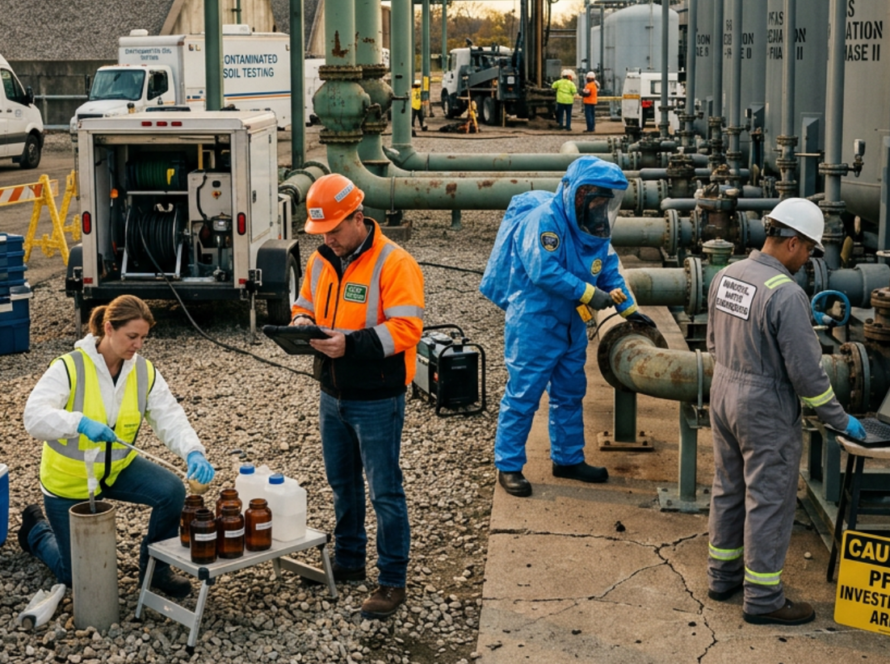
Per- and polyfluoroalkyl substances (PFAS), commonly known as “forever chemicals,” have become a growing concern for governments and industries due to their extreme chemical stability and long-term persistence in the environment.
These compounds are now widely detected in:
- Groundwater systems
- Surface water bodies
- Drinking water supplies
Their resistance to natural degradation has made PFAS one of the most difficult contamination issues in modern environmental management.
Nano-Cage Filtration Technology Delivers Breakthrough Performance
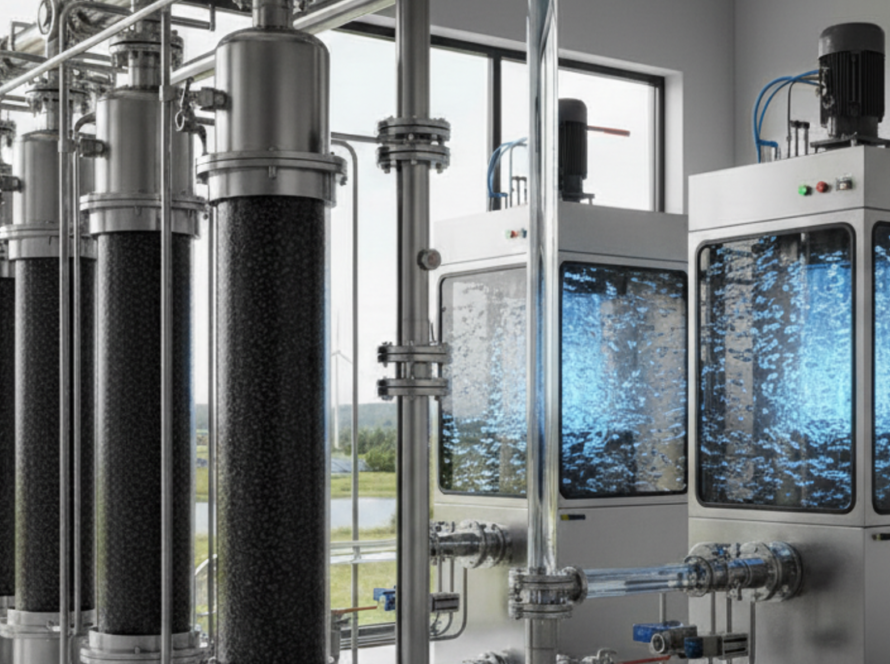
The research team, led by Dr. Witold Bloch, has developed an advanced adsorption system built around nano-scale molecular cages designed to selectively capture PFAS molecules.
Unlike conventional filtration methods, the system works by:
- Trapping PFAS within molecular cavities
- Forcing molecular aggregation for stronger binding
- Enhancing capture of short-chain PFAS variants
Short-chain PFAS have historically been difficult to remove, making this capability a critical advancement in remediation science.
The findings have been published in Angewandte Chemie International Edition, underscoring the scientific validation behind the approach.
High Efficiency with Industrial-Grade Reusability
Laboratory testing confirms that the system can remove up to 98% of PFAS contaminants under controlled conditions.
Equally important for commercial applications is its operational durability:
- Maintains performance across multiple reuse cycles
- Supports repeated filtration without efficiency loss
- Reduces lifecycle operational costs
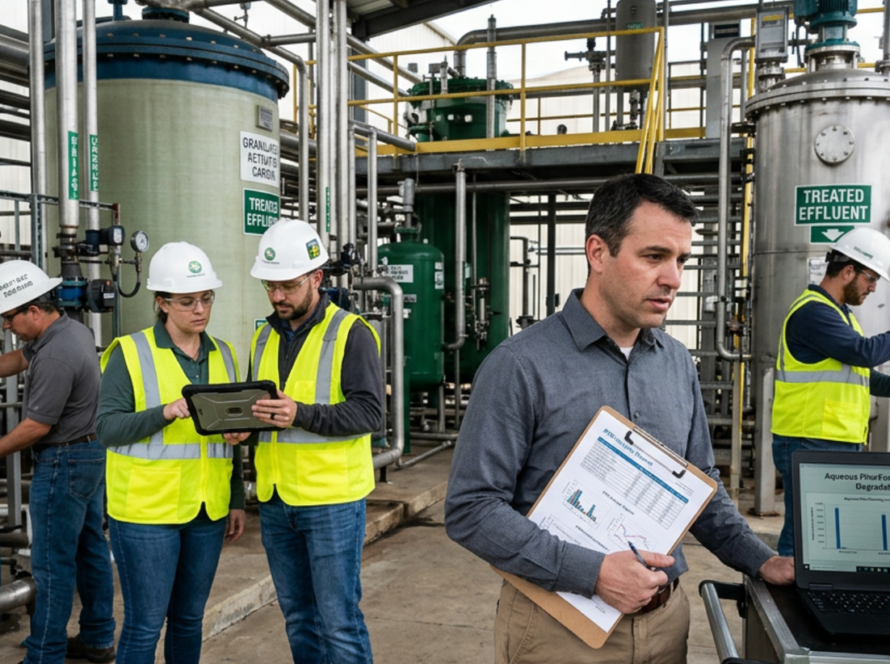
For water treatment operators and industrial users, this combination of efficiency and reusability significantly improves deployment viability.
Engineered for Real-World Water Treatment Integration
To enable scalability, the nano-cage structures are embedded within mesoporous silica, allowing integration into conventional filtration frameworks.
This design enables:
- Broader PFAS compound capture range
- Higher selectivity and adsorption efficiency
- Compatibility with existing treatment infrastructure
The approach is engineered with scalability in mind, a key requirement for global water utilities facing increasing regulatory pressure.
Strategic Implications for Global Water Infrastructure
The emergence of high-efficiency PFAS removal technology carries major implications for environmental infrastructure and regulatory compliance worldwide.
Key impacts include:
- Strengthened drinking water safety standards
- Enhanced industrial wastewater treatment capabilities
- Reduced long-term environmental contamination risks
- Scalable deployment across municipal systems
As regulatory frameworks tighten across the U.S., Europe, and Asia-Pacific, demand for advanced PFAS remediation solutions is expected to accelerate significantly.
Outlook: From Laboratory Breakthrough to Scalable Deployment
While currently at the research and validation stage, the technology demonstrates strong potential for commercialization.
The next phase of development will likely focus on:
- Pilot-scale deployment in water treatment facilities
- Industrial validation under real-world conditions
- Integration into municipal water systems
For executives in water technology, environmental services, and infrastructure investment, PFAS remediation is rapidly emerging as a high-priority innovation segment.
Conclusion
This breakthrough in nano-cage filtration technology represents a meaningful shift in the global approach to PFAS contamination.
By combining high removal efficiency with reusability and scalability, the innovation positions itself as a potential cornerstone in next-generation water treatment infrastructure.
As global regulatory pressure intensifies, technologies like this are expected to play a central role in reshaping environmental compliance and water safety standards.
For more insights on PFAS remediation, clean technologies, and environmental innovations, visit:
Register for PFAS Remediation Xchange 2026