
The global electric vehicle transition is entering a decisive phase in 2026-one defined not by adoption alone, but by industrial-scale execution in battery manufacturing. As EV penetration accelerates worldwide, EV battery manufacturing is becoming the core pillar of energy transition strategies across major economies.
What was once a demand-driven growth story is now shifting toward supply chain resilience, localized production, and advanced manufacturing capability.
From EV Adoption to Industrial Execution
Over the past decade, the electric mobility narrative was dominated by consumer adoption, policy incentives, and early-stage infrastructure development. That phase is now evolving into a more structurally complex industrial buildout.
The focus has shifted to:
- Large-scale battery cell production
- Supply chain localization
- Cost efficiency and material security
- Manufacturing reliability and scalability
For global stakeholders, battery manufacturing is no longer a supporting industry-it is the foundation of the entire EV ecosystem.
Supply Chain Resilience Becomes a Strategic Priority
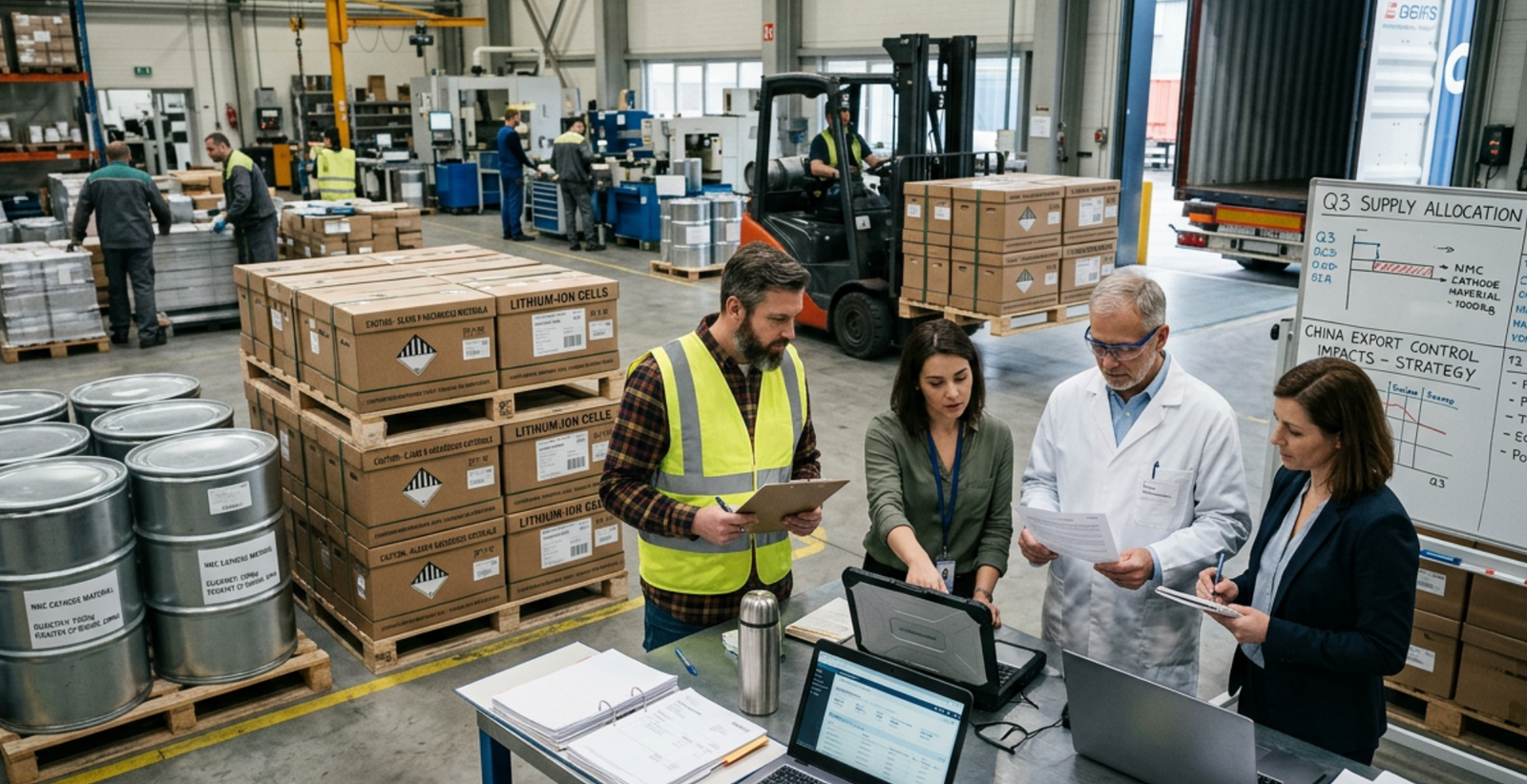
One of the defining shifts in 2026 is the increasing emphasis on supply chain resilience. Geopolitical uncertainty, raw material concentration, and logistics volatility have highlighted the risks of overdependence on imports.
As a result, governments and industry players are prioritizing:
- Domestic manufacturing capabilities
- Diversified sourcing of critical minerals
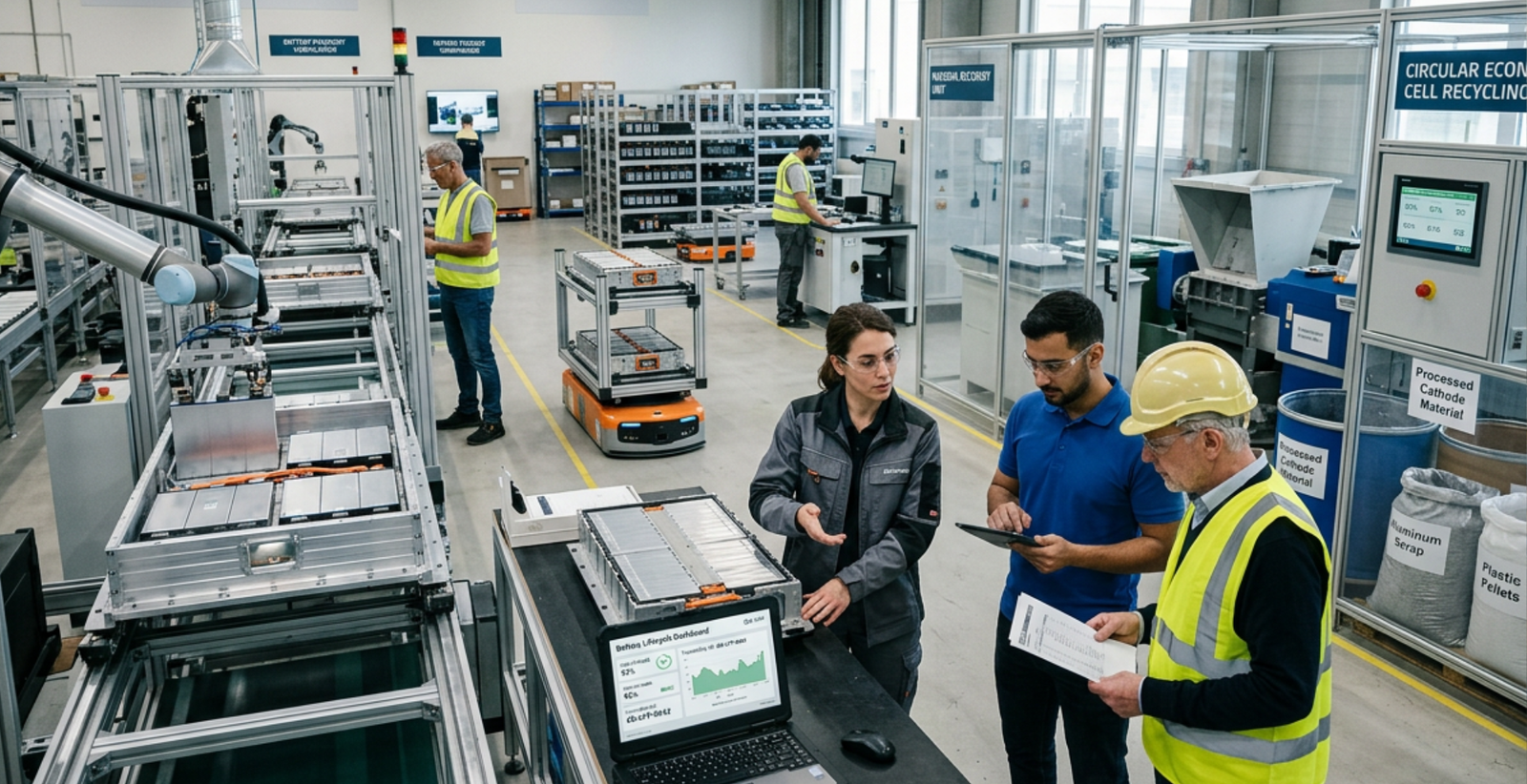
- Strategic stockpiling and recycling integration
This shift is reshaping how EV ecosystems are being designed globally.
Manufacturing Scale and Cost Competitiveness
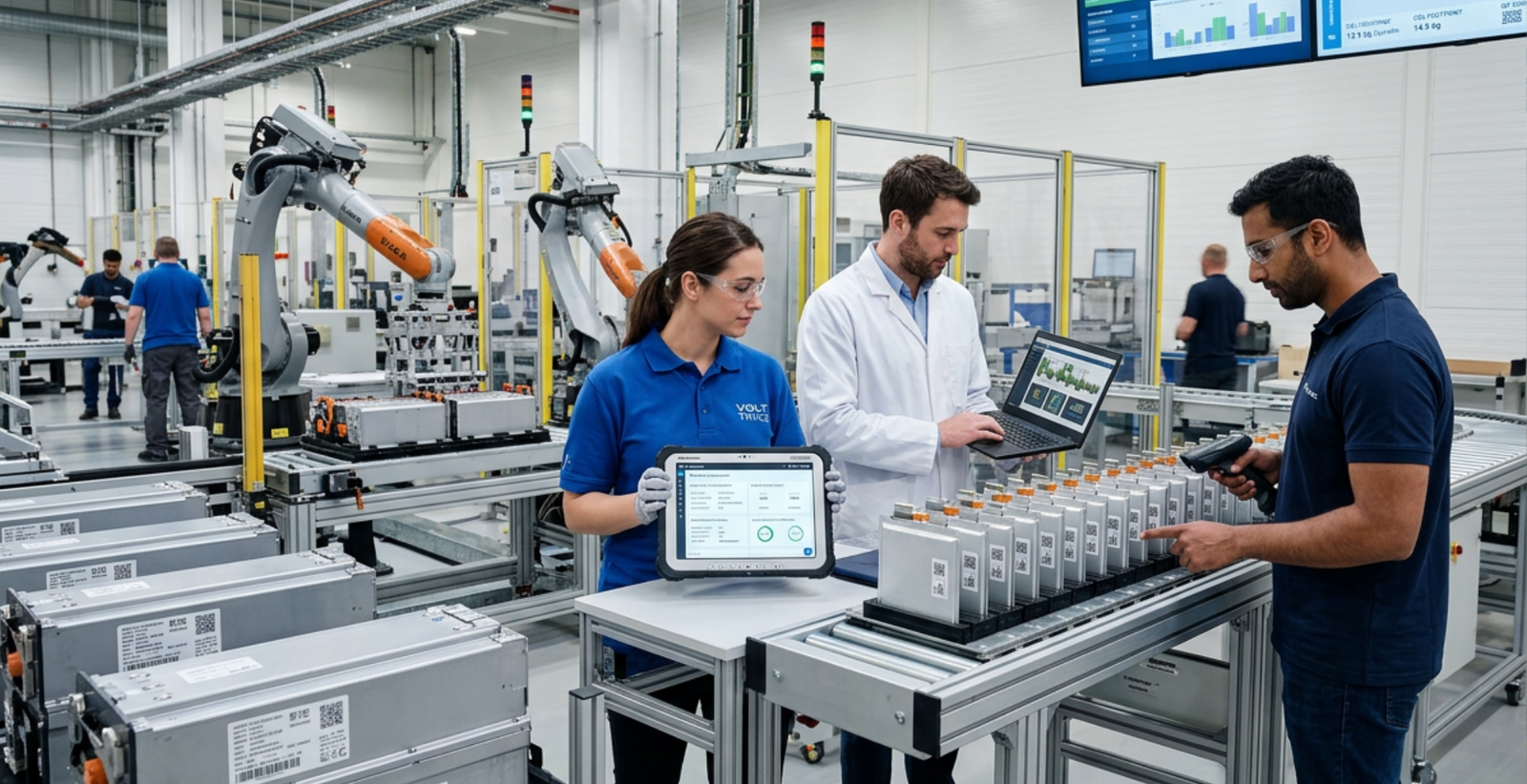
As EV demand expands across passenger vehicles, commercial fleets, and two- and three-wheelers, battery demand is rising exponentially. This is placing pressure on manufacturers to scale rapidly while maintaining cost competitiveness.
Key drivers include:
- Economies of scale in cell production
- Optimization of battery pack architecture
- Improved energy density and lifecycle performance
- Reduction in total cost of ownership for EVs
For C-level executives, scale is now the defining metric of competitiveness.
Technology Integration Across the Value Chain
Modern EV battery manufacturing is no longer limited to assembly operations. It now spans a highly integrated ecosystem that includes:
- Cell chemistry innovation
- Battery management systems (BMS)
- Thermal and safety engineering
- Recycling and circular recovery systems
- Second-life battery applications
This integration is essential for achieving long-term sustainability and operational efficiency across the EV lifecycle.
India’s Role in the Global Manufacturing Shift
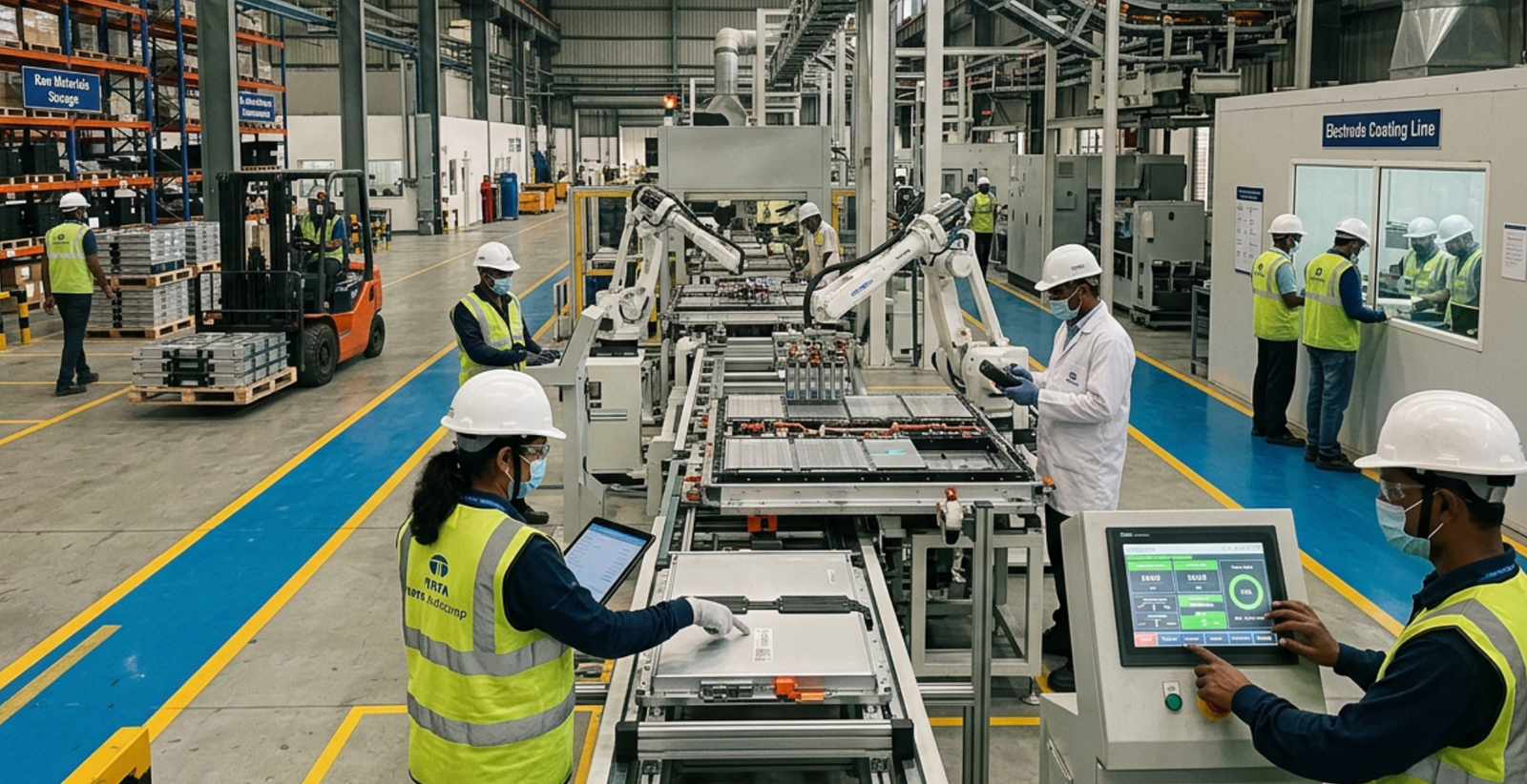
Markets such as India are emerging as important nodes in the global battery manufacturing ecosystem. Policy support, demand growth, and industrial investment are accelerating localization efforts.
Recent policy measures supporting duty rationalization and domestic production incentives reflect a broader global trend: shifting critical manufacturing closer to demand centers.
This positions India as a strategic contributor to global EV supply chain diversification, rather than a standalone market.
Execution Over Expansion: The New Competitive Era
The EV battery industry is entering a phase where execution capability outweighs market ambition.
Winning organizations will be defined by:
- Manufacturing precision and quality control
- Supply chain robustness
- R&D-driven innovation
- Scalable production systems
In this environment, operational excellence is becoming the primary differentiator.
Conclusion: A Global Manufacturing Inflection Point
EV battery manufacturing is undergoing a structural transformation in 2026. The industry is transitioning from fragmented early-stage production to globally integrated, high-scale industrial systems.
For policymakers, manufacturers, and investors, the message is clear: the future of electric mobility will be determined by manufacturing depth, not just market demand.
The next decade will belong to ecosystems that can successfully align technology, scale, and supply chain resilience into a unified industrial strategy.
The post EV Battery Manufacturing Enters a Global Industrial Scale Phase in 2026 appeared first on EV Battery Supply Chain Xchange 2026.