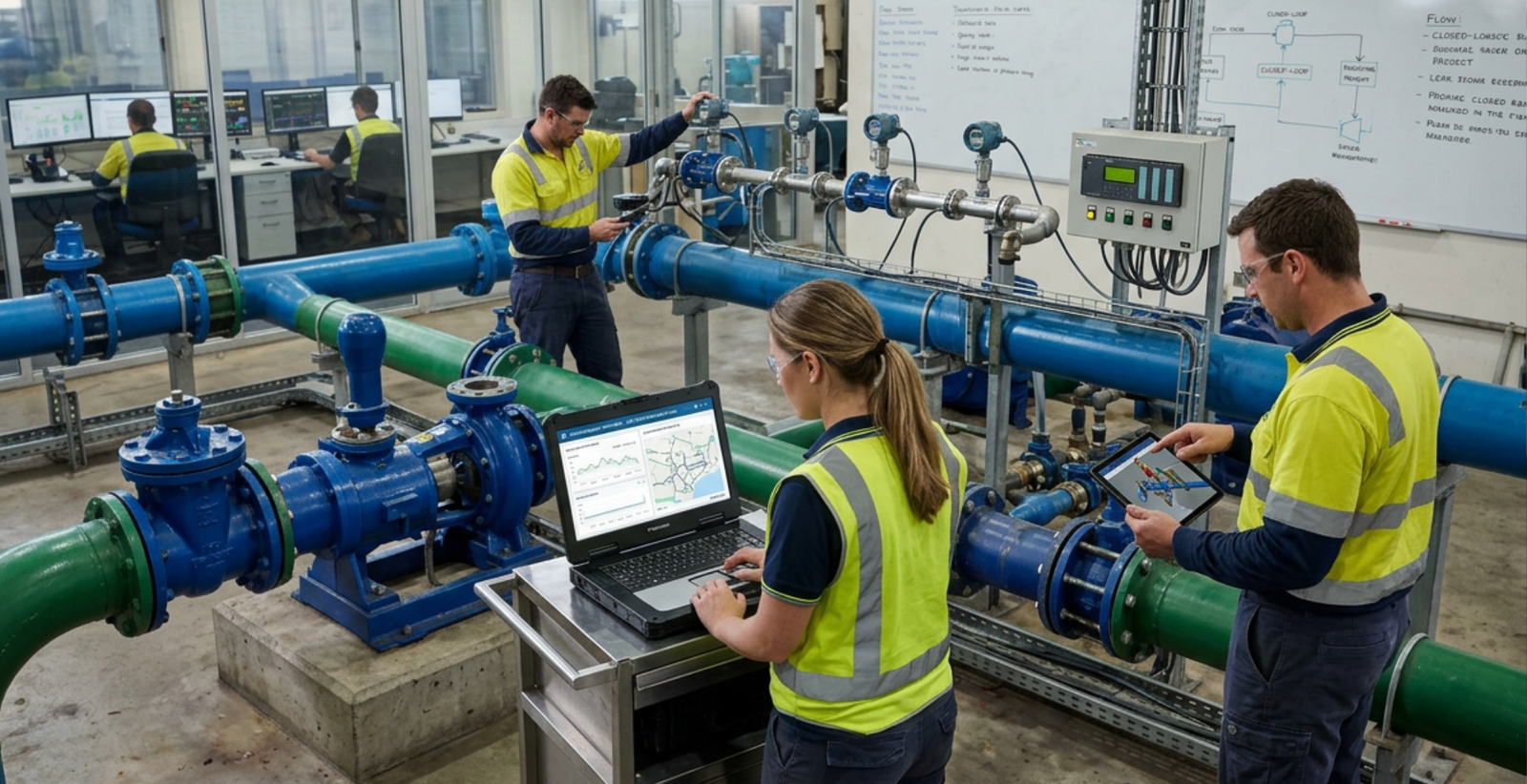

EU Accelerates Strategic Shift Toward AI-Driven, Climate-Resilient Water Infrastructure
The European Union is driving a coordinated transformation in water infrastructure strategy, signaling a decisive move toward digitally enabled, climate-resilient utility systems. Across policy frameworks and funding ecosystems, the emphasis is shifting from traditional water management toward intelligent, data-driven infrastructure networks.
For C-level executives in utilities, infrastructure development, and environmental technology, this represents a structural market shift: water systems are evolving into AI-powered, predictive, and continuously optimized assets.
Water Infrastructure Is Becoming a Digital Intelligence System
A consistent direction is emerging across EU-backed innovation programs: the modernization of water infrastructure through advanced digital technologies.
This transition is being powered by the integration of:
- Artificial intelligence for predictive analytics and system optimization
- IoT-enabled sensor networks for real-time infrastructure monitoring
- Digital twins for simulation, forecasting, and operational planning
- Advanced cybersecurity frameworks for critical infrastructure protection
- Hybrid engineering models combining nature-based and technical solutions
Together, these technologies are redefining water infrastructure as a self-learning operational ecosystem rather than a static utility network.
Strategic Focus: Resilience, Efficiency, and Resource Optimization
The transformation is not purely technological-it is fundamentally strategic.
Three core priorities are shaping investment and policy direction:
- Strengthening infrastructure resilience against climate volatility and environmental stress
- Improving operational efficiency across water distribution and wastewater systems
- Enhancing resource recovery and reducing environmental impact
This signals a broader shift toward performance-optimized, climate-adaptive infrastructure systems designed for long-term sustainability and operational intelligence.
Cybersecurity Becomes a Core Infrastructure Layer
As water systems become increasingly digitized, cybersecurity has transitioned from a technical consideration to a core infrastructure requirement.
Modern water networks now depend on interconnected digital systems, introducing new layers of operational and systemic risk. As a result, infrastructure design is increasingly incorporating:
- Secure data exchange across distributed networks
- Protection of operational technology (OT) environments
- Safeguarding of AI-enabled control systems
- Resilient architecture for critical national infrastructure
This reflects a key reality: digital transformation and infrastructure security are now inseparable components of utility modernization.
Implications for Utilities, Industry Leaders, and Investors
For executive decision-makers, the EU’s direction signals a broader revaluation of water infrastructure as a strategic asset class.
Key implications include:
- Water infrastructure is evolving into a technology-driven investment category
- AI, IoT, and digital twins are becoming core operational infrastructure layers
- Public funding and policy support are aligning with climate-tech and digital convergence themes
- Cross-sector collaboration is becoming essential for scaling infrastructure innovation
Organizations that align early with this transformation are positioned to gain a structural advantage in future infrastructure ecosystems.
The Rise of Intelligent Infrastructure Ecosystems
The broader trajectory points toward the emergence of intelligent infrastructure ecosystems, where environmental sustainability, digital intelligence, and operational resilience converge into a unified framework.
In this model, water infrastructure is no longer viewed as a standalone utility function. Instead, it is becoming a strategic, data-driven system integrated into climate adaptation, urban resilience, and digital governance frameworks.
Future competitive advantage will depend on:
- Digital maturity of infrastructure operations
- AI integration across decision-making systems
- Real-time data architecture capabilities
- Alignment with sustainability and resilience mandates
Conclusion
The European Union’s strategic direction reflects a clear and irreversible shift toward AI-enabled, climate-resilient, and digitally integrated water infrastructure systems.
For C-level leadership teams, the implication is direct:
water infrastructure is entering a new operating model where intelligence, resilience, and digital capability define long-term value creation and strategic competitiveness.