
The second week of March 2026 has confirmed that the primary challenge for EV infrastructure is no longer the physical installation of chargers, but the intelligent orchestration of the energy they draw. For the C-suite, the focus has moved toward managing the “megawatt wall” and leveraging vehicles as high-value assets within the broader energy market.
1. Software-Defined Power: Managing the Megawatt Wall
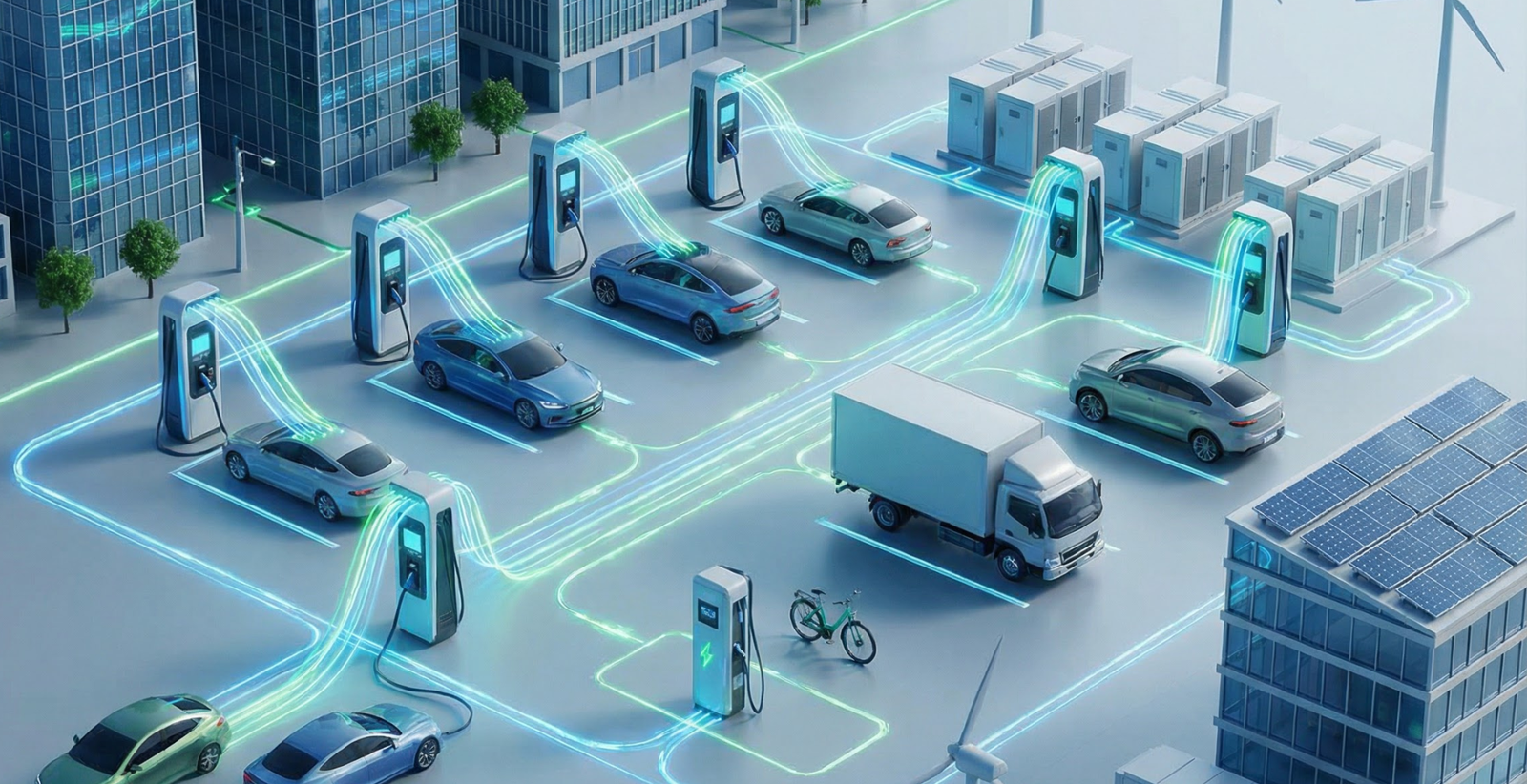
As logistics hubs and commercial depots scale their fleets, the instantaneous load of 50 or more fast chargers is creating localized grid constraints. This week, the deployment of Dynamic Energy and Load Management Systems (DELMS) has become a strategic priority.
Platforms from providers like Schneider Electric and FieldEx are now capable of fine-increment power shifting. By dynamically allocating capacity between charging posts, HVAC systems, and onsite battery storage, these systems prevent site-wide overloads without requiring expensive utility substation upgrades. This software-first approach is allowing facilities to double their charging capacity while maintaining the same electrical footprint.
2. V2G and V2H: The Pivot to Revenue and Resilience
While V2G (Vehicle-to-Grid) has been slowed by regulatory hurdles, the landscape changed significantly on March 7, 2026.
- Germany’s Regulatory Win: The German Parliament has finalized the removal of the “double grid-fee” penalty for 2026. This treats EVs as standard storage assets, allowing them to return power to the grid without incurring redundant fees. Renault and Mercedes-Benz are immediately responding by launching the first commercial V2G-ready consumer offers in the region.
- The Rise of V2H: For residential and smaller commercial sites, Vehicle-to-Home (V2H) is emerging as a more immediate solution. Because V2H avoids the complexities of utility export rules by keeping the energy on-site, it is becoming a standard feature in high-end residential developments. The car is effectively replacing the stationary home battery as the primary backup and peak-shaving resource.
3. Incentivized Mandates: The Himachal Pradesh Model
A new regulatory “carrot and stick” model was established this week in India. The government of Himachal Pradesh has mandated EV charging infrastructure in all new commercial and public buildings.
To offset the cost, the state is offering a 0.25 Floor Area Ratio (FAR) incentive for energy-efficient, EV-ready buildings. This represents a significant shift in urban planning, where developers are now rewarded with additional sellable or leasable space in exchange for installing high-capacity charging hubs. For real estate executives, this turns a compliance cost into a direct asset-value multiplier.
4. Frictionless Charging: Wireless and Automated Docking
The push for convenience is driving the first major commercial rollout of wireless and automated docking systems.
- Premium Wireless: Following Porsche’s announcement of a 22kW inductive charging system, 2026 is seeing the integration of wireless pads into premium parking and hospitality destinations.
- Automated Commercial Hubs: Utilizing the recently finalized IEC 61851-26 standards, autonomous bus and delivery fleets are beginning to utilize automated underbody docking. This eliminates the manual plug-in requirement, ensuring that autonomous assets can maintain 100% uptime without human intervention in the depot.
The Bottom Line
The 2026 landscape is defined by the transition from hardware build-out to software-defined energy orchestration. With Germany’s fee removal and the arrival of FAR incentives, the commercial case for bidirectional charging and building integration is finally clear. For the C-suite, the priority has moved beyond simple procurement toward securing the load management platforms that will prevent infrastructure bottlenecks and unlock new revenue streams from stationary fleet assets.
Read about : The Eight EV Charging Industry Trends That Defined 2025
The post The Orchestration Era: Monetizing and Automating the 2026 Grid appeared first on evchargingxchange.com.