
If the first week of March was about the “what” of battery recycling, the second week is proving to be about the “how.” For C-suite leaders, the conversation has moved past the environmental altruism of recycling and straight into the heart of resource sovereignty. We are witnessing the birth of “Urban Mining” as a standardized industrial asset class, where your end-of-life fleet is no longer a disposal headache—it is your most reliable mineral bank.
The shift is palpable: we are stopping the “collect and bury” cycle and starting a high-precision chemical extraction industry that rivals traditional mining in both scale and purity.
From “Black Mass” to Battery-Grade Salts
The most significant operational update this week involves the stabilization of the direct-to-cathode recycling pathway. Traditionally, recyclers produced “black mass”—a crude mixture that required extensive secondary refining.
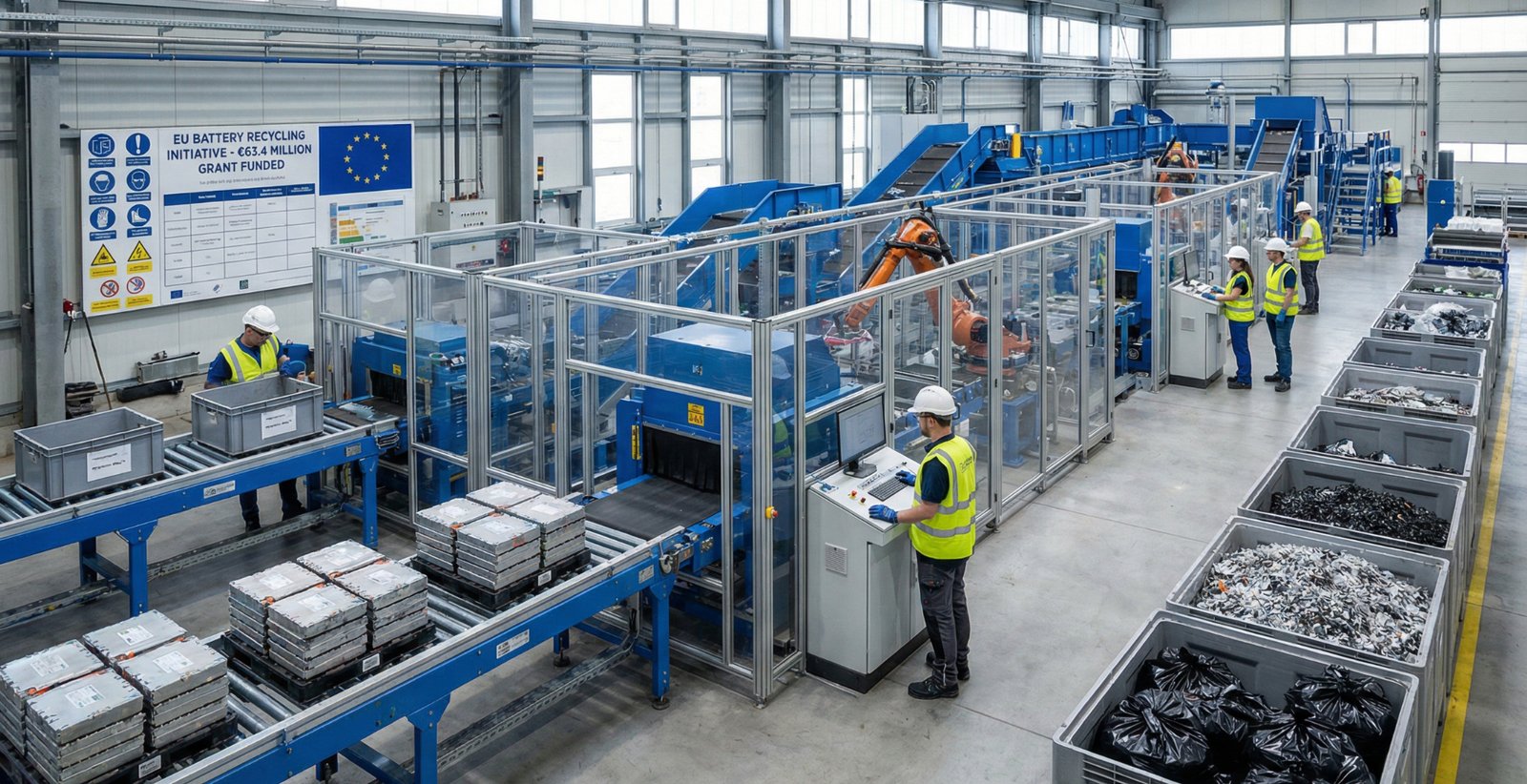
- The 2026 Standard: New hydrometallurgical facilities opening this week in India and the UK are skipping the intermediate steps. They are outputting battery-grade lithium carbonate and nickel sulfates directly from the recycling line.
- The Economic Win: By cutting out the secondary refining middleman, these “closed-loop” hubs are reporting a 15% reduction in the total cost of recycled cathode active materials (pCAM) compared to Q1 2025.
Automated Sorting: The “Robo-Dismantler” Era
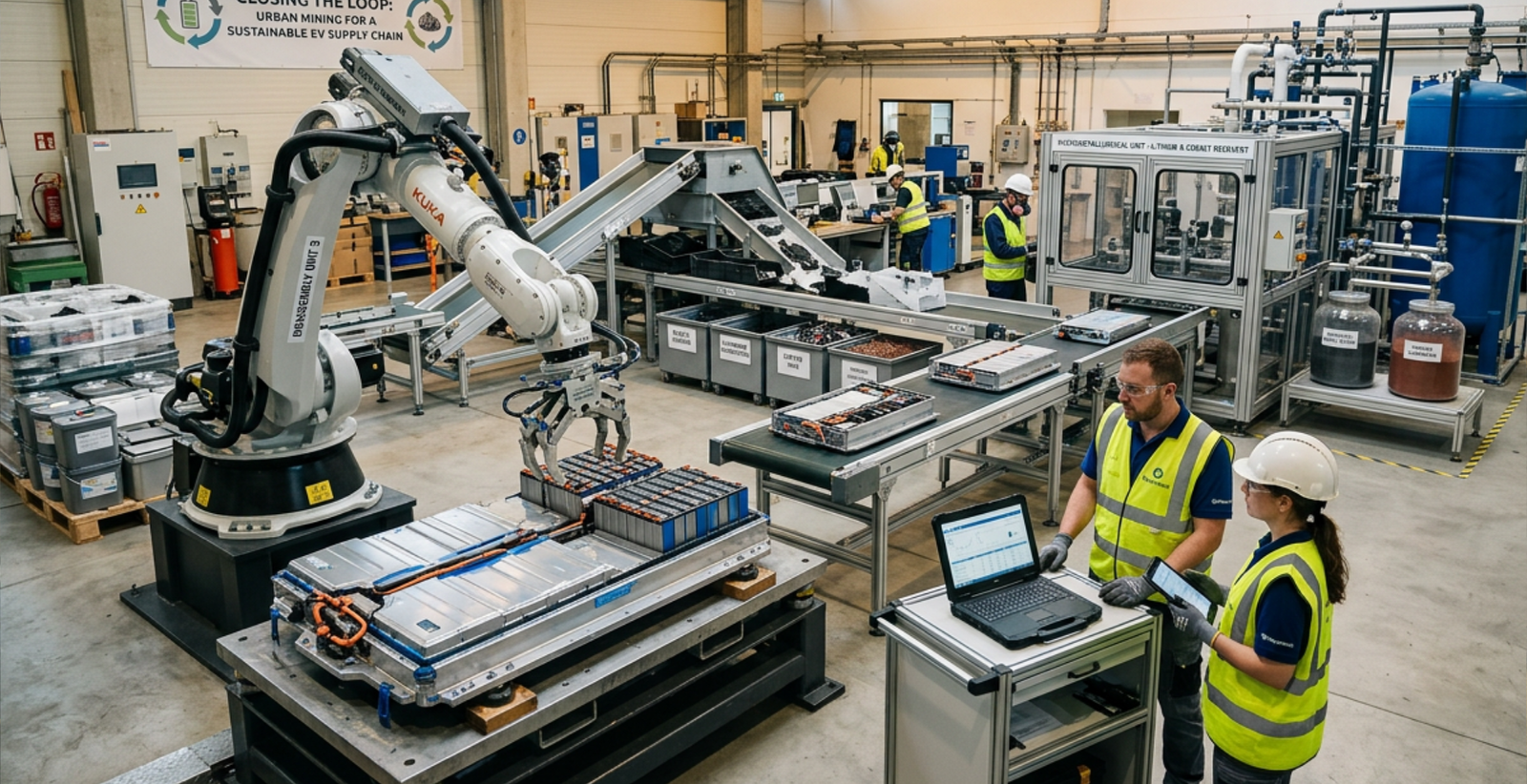
A major bottleneck in recycling has always been the manual labor required to discharge and disassemble complex battery packs. This week, several North American facilities announced the full-scale deployment of AI-driven robotic disassembly lines.
- Efficiency Gains: These systems use computer vision to identify pack architectures from over 50 different EV models, discharging and stripping them in under 20 minutes.
- Safety & Yield: Beyond speed, automation eliminates the risk of “thermal events” during manual handling and improves the purity of the recovered aluminum and copper by 30%.
The “Regulatory Currency” of 2026
As the Industrial Accelerator Act (IAA) gains momentum in Europe, recycled content is becoming a form of “regulatory currency.” For automakers, every ton of recycled cobalt or lithium recovered within the EU now counts directly toward the “Made in EU” value-add quotas required for government subsidies.
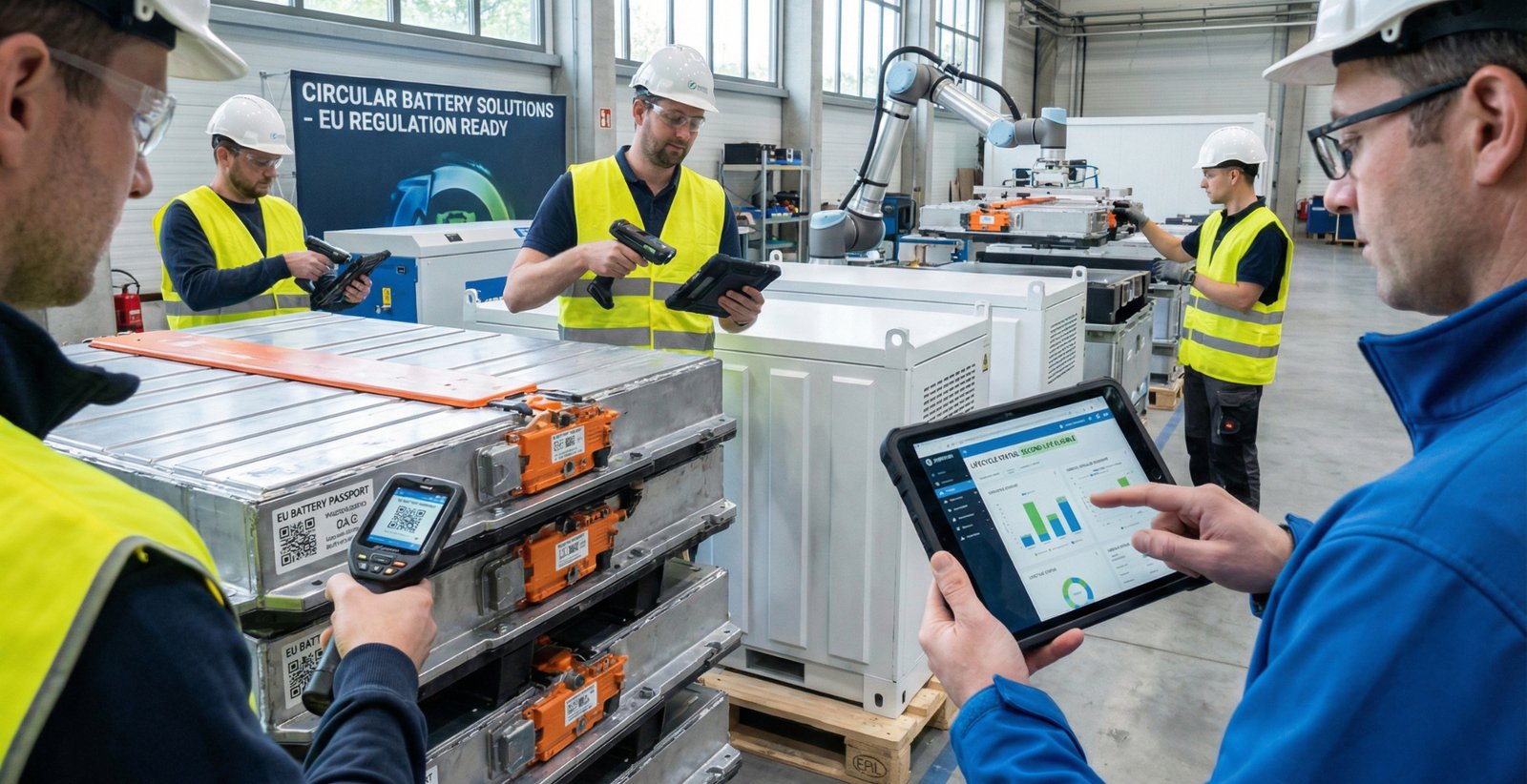
- Traceability is King: This week saw the first live demonstrations of API-integrated Battery Passports. This software allows a recycler to “ping” the original manufacturer’s digital twin, instantly verifying the mineral’s origin and carbon footprint.
- Procurement Shift: Supply chain directors are no longer just signing “take-back” agreements; they are negotiating equity-in-minerals contracts, ensuring that the lithium they sell today is the lithium they get back in 2032.
Strategic Hurdles for the C-Suite
As you scale your circular strategy, three tactical shifts require immediate attention:
- Logistics of the “Reverse Supply Chain”: Moving dead batteries is classified as transporting hazardous waste. Your 2027 logistics budget must account for specialized “fire-suppression” containers and certified “Class 9” hazardous materials handling.
- Chemistry-Specific Yields: Not all batteries are created equal. The rise of LFP (Lithium Iron Phosphate) recycling is a different economic beast than high-nickel NCM. You need a recycling partner whose technology can profitably process both.
- The “Residual Value” Gap: As recycling tech hits 99% recovery, the scrap value of an EV is rising. This changes your leasing residual value (RV) models—an old EV may soon be worth more for its minerals than for its parts.
The Bottom Line
The “Good News” in battery recycling for 2026 is that the unit economics have finally matured. Between AI-led automation and the 99% recovery benchmarks, “urban mining” is now faster, safer, and more profitable than traditional extraction. For the C-suite, the mandate is to stop viewing recycling as a “end-of-life” problem and start treating it as a front-end supply strategy. The minerals for your 2030 production run are already on the road today.
The post The Mineral Bank: Moving Beyond Scrap in 2026 appeared first on batteryrecyclingxchange.com.