
India has taken a significant step toward strengthening its critical materials ecosystem with the establishment of a new integrated lithium-ion battery and rare earth recycling facility in Uttar Pradesh. The development marks an important milestone in building domestic circular supply chains for electric mobility and advanced manufacturing.
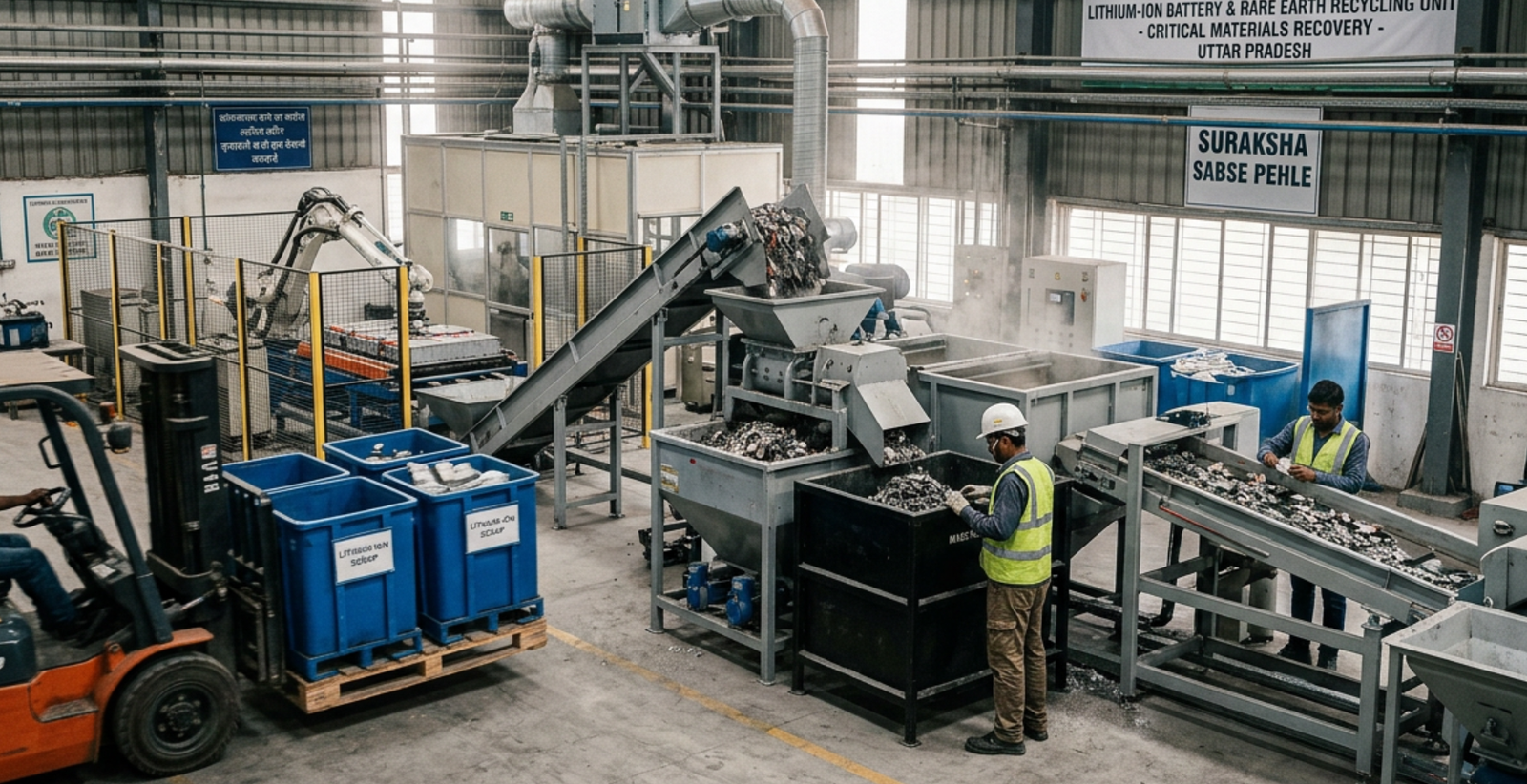
The facility, developed by Rocklink India Pvt. Ltd., is designed to process lithium-ion batteries, rare earth magnets, and metal-bearing industrial waste, reinforcing India’s strategic focus on resource recovery and material independence.
Strengthening Domestic Critical Materials Recovery
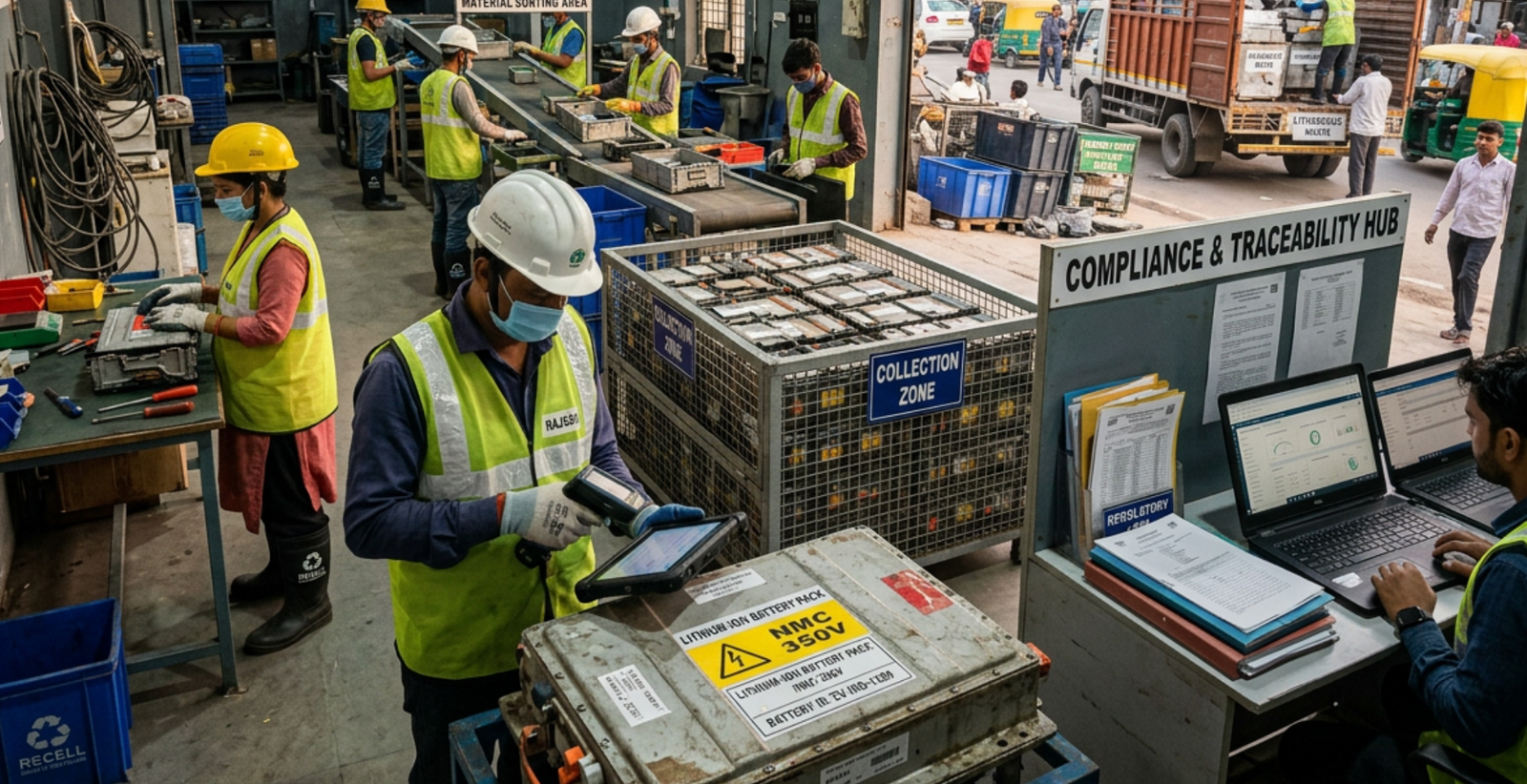
The India lithium battery recycling facility introduces a structured approach to recovering high-value materials from end-of-life batteries and industrial scrap. With an initial capacity of 10,000 tonnes per year for lithium-ion batteries and 60 tonnes per month for rare earth magnet processing, the facility significantly enhances India’s domestic recycling capabilities.
A rare earth chloride processing unit with an annual capacity of 1,500 tonnes is also scheduled for commissioning, further expanding downstream processing capabilities.
For C-level stakeholders, this development reflects a broader shift toward localized critical mineral recovery and reduced reliance on imported raw materials.
Building a Circular Battery and Magnet Supply Chain
The facility is registered under Extended Producer Responsibility (EPR) norms and is capable of processing a wide range of battery scrap materials. It integrates advanced recycling systems designed to recover metals such as aluminium, copper, and iron with recovery rates exceeding 98%.
Recovered materials are converted into “black mass” for further refinement, creating a structured pathway back into the battery manufacturing ecosystem.
This closed-loop model supports the transition toward a circular economy, where end-of-life batteries are treated as strategic resource assets rather than waste.
Rare Earth Processing and Strategic Diversification
A key differentiator of the facility is its dedicated rare earth magnet recycling infrastructure. It processes critical materials such as NdFeB, SmCo, and AlNiCo, which are widely used in electric motors, renewable energy systems, and industrial applications.
The integration of semi-automated dismantling systems enhances material traceability and processing efficiency-an essential requirement for scaling rare earth recovery operations.
Expanding Battery Lifecycle Management
Beyond recycling, Rocklink India plans to introduce battery refurbishment operations at the site. This will enable testing, balancing, and repurposing of usable battery cells, effectively extending battery life cycles and improving overall resource efficiency.
This approach reflects an emerging industry trend: shifting from linear consumption models to lifecycle-based asset utilization strategies.
Technology-Driven Recycling Infrastructure
The facility utilizes an in-house recycling process designed to handle multiple battery chemistries while managing hazardous emissions through controlled gas treatment systems.
Additionally, materials unsuitable for direct recycling are processed into rare earth chlorides using rotary kiln-based systems, ensuring maximum resource recovery across material types.
The company is also expanding its “Magcycle” reverse logistics model in India, streamlining the collection and routing of magnet scrap into optimized recycling channels.
Strategic Implications for India’s Energy Transition
For policymakers and industry leaders, the India lithium battery recycling facility represents a strategic enabler of multiple national priorities:
- Strengthening domestic supply chains for critical minerals
- Supporting electric mobility and renewable energy growth
- Reducing import dependency for rare earth materials
- Advancing circular economy frameworks
By integrating recycling, refurbishment, and rare earth processing, the facility positions India closer to a self-sustaining critical materials ecosystem.
Conclusion: A Step Toward Resource Independence
The launch of this integrated recycling facility marks a pivotal step in India’s transition toward a circular and resilient materials economy. It highlights the growing importance of domestic recovery infrastructure in supporting the next phase of electrification and industrial growth.
For C-level decision-makers, the message is clear: control over critical materials will increasingly depend not just on mining, but on the ability to efficiently recover, refine, and reuse them at scale.
The post India Expands Critical Materials Recycling with New Lithium-Ion and Rare Earth Facility in Uttar Pradesh appeared first on EV Battery Recycling Xchange 2026.