
From EV Adoption to Resource Strategy
The Government of Delhi is preparing to launch a comprehensive EV battery recycling framework under its upcoming EV Policy 2.0-marking a critical transition from EV adoption to lifecycle management.
As electric vehicle penetration accelerates, the policy signals a forward-looking shift: battery waste is no longer an environmental afterthought-it is a strategic resource opportunity.
The Delhi Pollution Control Committee (DPCC) is expected to act as the nodal agency, overseeing implementation, compliance, and operational governance.
The Emerging Battery Waste Challenge
EV growth brings with it a delayed but inevitable consequence-battery end-of-life management.
With typical EV batteries lasting 12–14 years, cities like Delhi are entering a critical planning window. Without structured systems:
- Environmental risks escalate
- Valuable materials like lithium, cobalt, and nickel are lost
- Supply chain dependencies deepen
Delhi’s proactive approach positions it ahead of the curve in addressing what will soon become a global urban sustainability challenge.
Policy 2.0: Building a Circular Battery Ecosystem
The proposed framework goes beyond compliance-it aims to build a closed-loop battery economy.
Key pillars include:
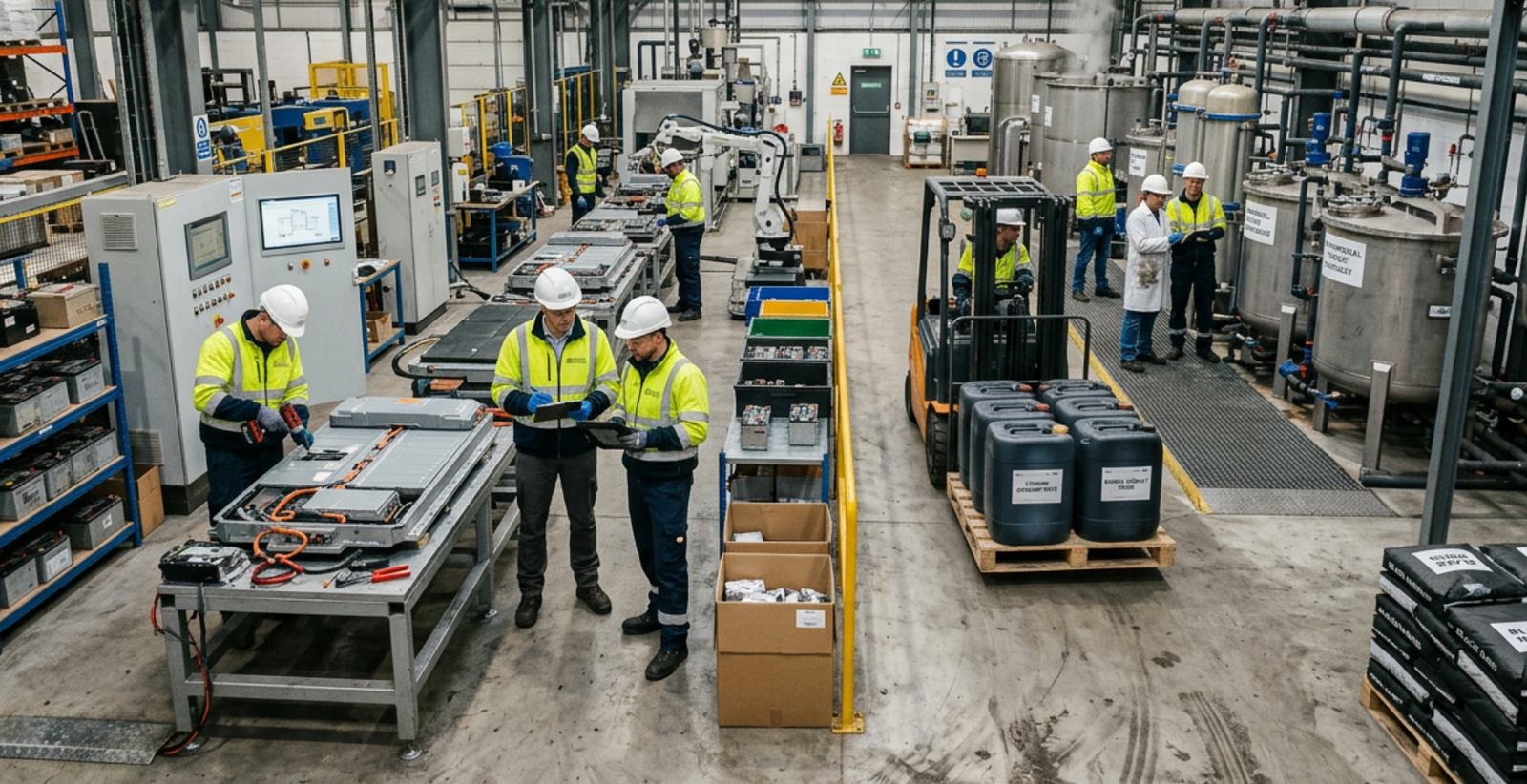
- Recycling infrastructure development to process end-of-life batteries
- City-wide collection networks for efficient aggregation
- Stronger regulatory oversight aligned with national norms
- Public–Private Partnership (PPP) models to scale operations
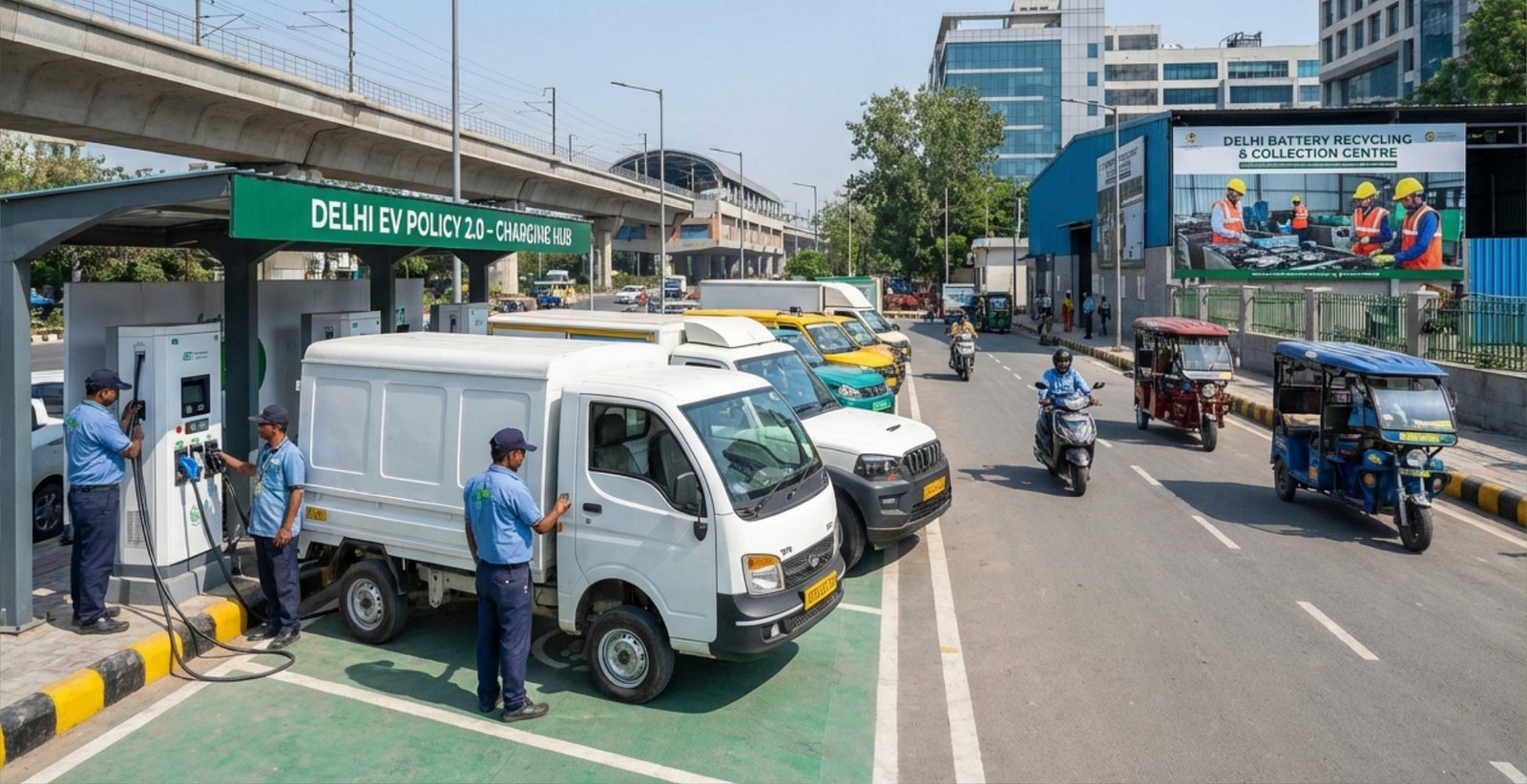
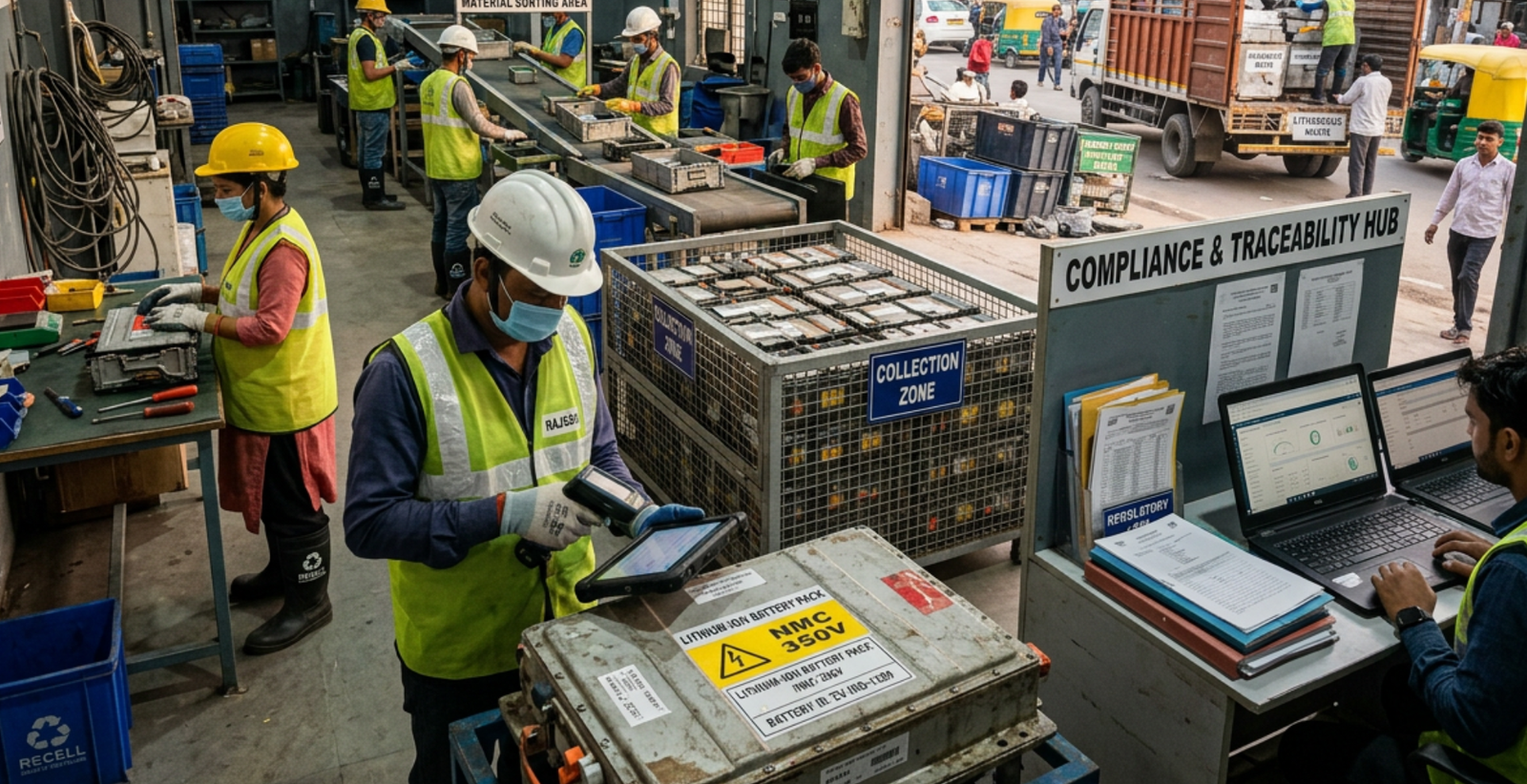
Battery collection centres will be established across the city in collaboration with authorized recyclers, ensuring safe handling and efficient material recovery.
Regulatory Backbone: Enforcing Accountability
The policy aligns with India’s Battery Waste Management Rules, 2022, with a strong emphasis on:
- Extended Producer Responsibility (EPR)
- Mandatory reporting and traceability
- Compliance enforcement across OEMs and stakeholders
This introduces a new level of accountability for automakers and battery manufacturers, effectively embedding sustainability into the business model.
Infrastructure Expansion: Enabling the Ecosystem
In parallel, Delhi plans to:
- Expand public and private EV charging networks
- Strengthen logistics for battery collection and transport
- Develop standard operating procedures (SOPs) for safe handling, storage, and recycling
This integrated approach ensures that growth in EV adoption is matched by backend ecosystem readiness.
Global Implications: A Template for Urban Mobility
Delhi’s initiative reflects a broader global shift toward circular economy models in mobility.
Why this matters globally:
- Cities worldwide will face similar battery waste challenges within the next decade
- Recycling reduces reliance on geopolitically sensitive mineral imports
- Circular supply chains can stabilize battery costs over time
- Regulatory frameworks like this may become global benchmarks
For multinational companies, this signals the need to align with localized recycling mandates while optimizing global supply chains.
Executive Insight: Strategic Imperatives
For C-level leaders across automotive, energy, and infrastructure sectors:
- Integrate recycling into core EV strategy-not as a compliance function
- Invest in partnerships with recyclers and material recovery firms
- Leverage circular supply chains to mitigate raw material risks
- Prepare for stricter urban regulations across global markets
- Explore second-life battery applications as a value lever
Conclusion: From Waste Management to Value Creation
Delhi’s EV Policy 2.0 is not just about managing battery waste-it is about redefining batteries as strategic assets across their lifecycle.
As EV adoption scales globally, the winners will be those who:
- Control not just battery production
But also, battery recovery, reuse, and recycling
The post Delhi’s EV Battery Recycling Framework: A Strategic Move Toward Circular Mobility appeared first on EV Battery Recycling Xchange 2026.