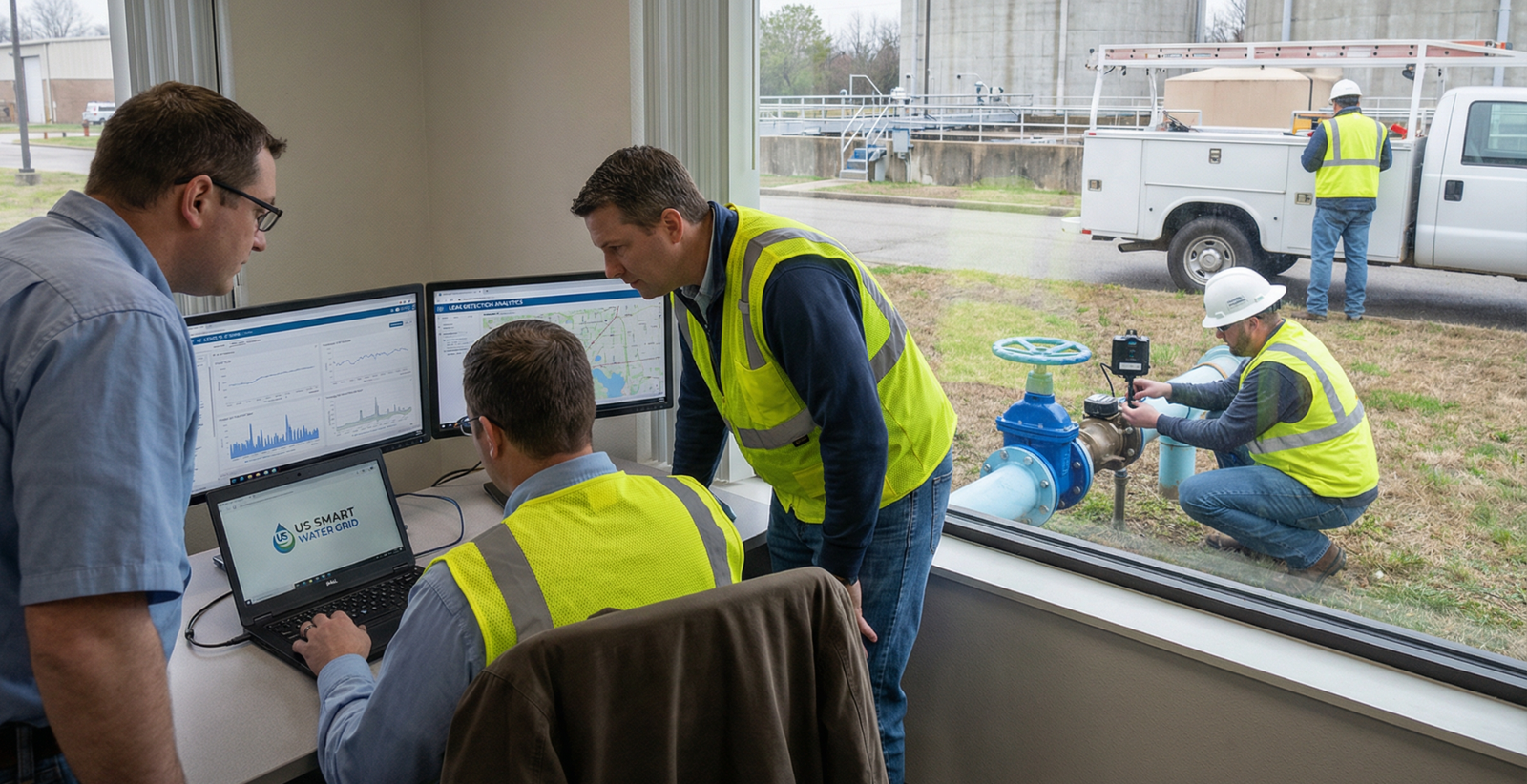


As global water systems face rising demand, aging infrastructure, and mounting climate pressure, smart water infrastructure has shifted from innovation to necessity. In 2026, forward-looking municipalities are no longer asking whether to digitize water networks-but how fast they can do so without compromising reliability, affordability, or public trust.
For C-level executives overseeing utilities, infrastructure investment, or smart city strategy, the message is clear: data-driven water management is now a core resilience capability, not a technology experiment.
Why Smart Water Infrastructure Is Now a Board-Level Priority
Water utilities worldwide lose billions annually due to non-revenue water (NRW)-losses driven by leaks, pipe failures, inaccurate metering, and delayed response. In conventional systems, NRW can exceed 30% of treated supply, representing not just wasted water, but wasted energy, capital, and public confidence.
In desalination-dependent and water-stressed regions, every lost cubic meter compound costs across the water-energy nexus. Smart water infrastructure addresses this challenge by introducing continuous visibility, allowing utilities to move from reactive maintenance to predictive, risk-based decision-making.
From Reactive Repairs to Predictive Control
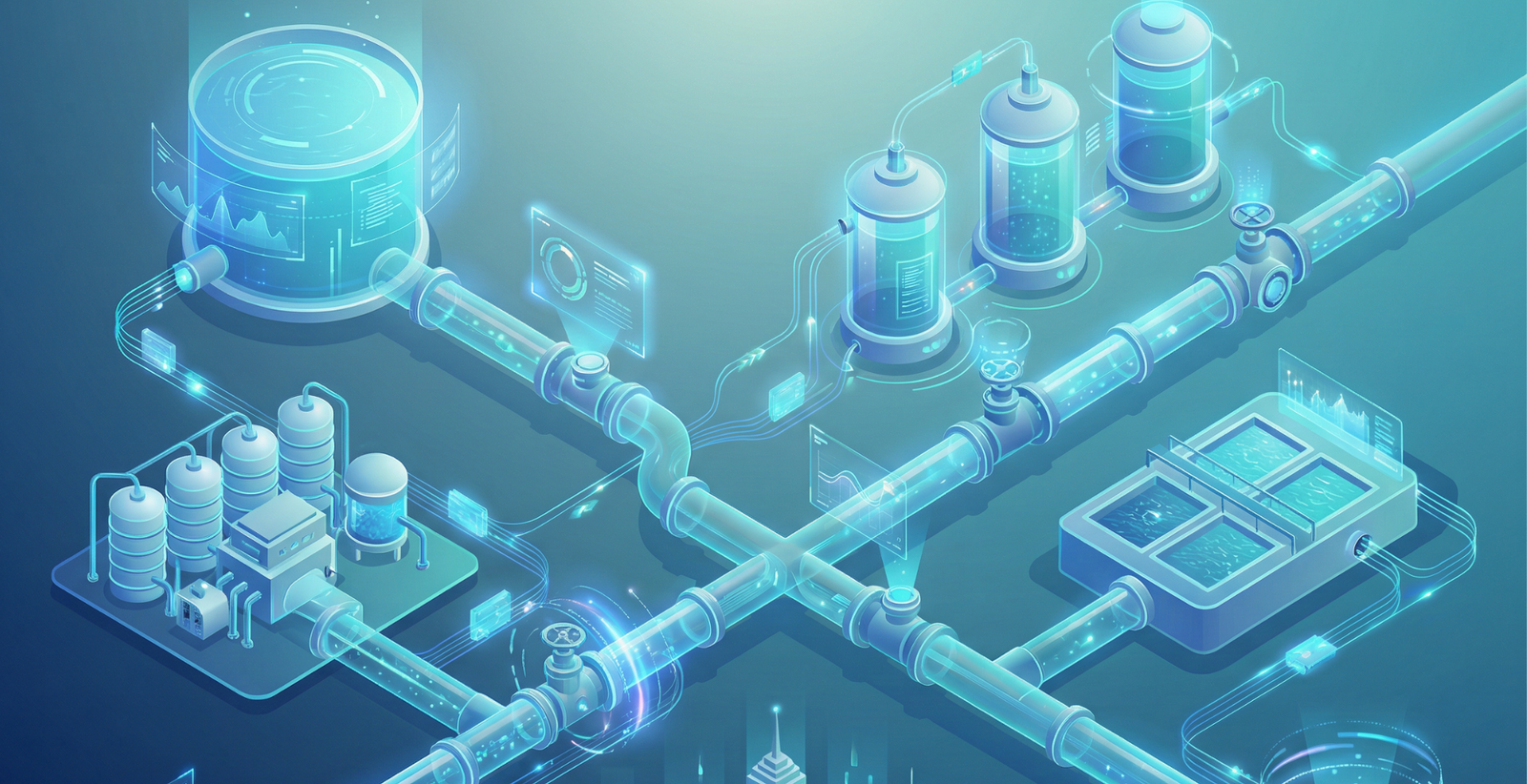
Modern smart water platforms integrate:
- IoT sensors monitoring pressure, flow, and vibration
- Advanced metering infrastructure (AMI) for real-time consumption data
- AI-driven analytics to detect leak signatures and predict failures
- GIS and asset data integration for network-wide intelligence
This convergence enables utilities to identify anomalies early, prioritize high-risk assets, and prevent minor faults from escalating into disruptive failures. The result is fewer emergency repairs, lower operating costs, and higher service reliability.
For executive leadership, this represents a strategic shift: infrastructure decisions become measurable investments with defensible ROI, rather than recurring operational expenses.
Data as the New Control Valve
Smart water infrastructure transforms raw operational data into actionable intelligence. AI models analyse historical and real-time inputs to forecast pipe degradation, optimize maintenance schedules, and simulate system behaviour under stress scenarios.
More advanced utilities are deploying digital twins-virtual replicas of physical networks that allow leaders to test capital plans, assess climate risk, and evaluate expansion strategies before committing resources. This capability is increasingly critical as urban populations grow and industrial demand intensifies.
Supporting ESG, Energy Efficiency, and Climate Goals
Efficiency gains in water systems deliver direct environmental benefits. Reduced water loss lowers the energy required for treatment and distribution, cutting emissions and operating costs simultaneously.
For executive teams accountable to ESG metrics and long-term sustainability targets, smart water infrastructure offers verifiable impact:
- Lower carbon intensity
- Improved asset longevity
- Enhanced resilience against climate volatility
In an era of increased regulatory scrutiny and investor expectations, transparency and performance matter.
Know about: How U.S. Water Utilities Must Evolve for the Next Decade
Why 2026 Marks the Inflection Point
Several forces are converging:
- Aging infrastructure reaching failure thresholds
- Rising energy and treatment costs
- Greater public intolerance for service disruptions
- Accelerated adoption of smart city technologies
Utilities that delay modernization risk compounding failures and escalating capital exposure. Those that act decisively position themselves as resilient, data-driven service providers, capable of scaling with future demand.
Executive Takeaway
Smart water infrastructure is no longer a technical upgrade-it is a strategic transformation. By combining AI, real-time monitoring, and predictive analytics, utilities can safeguard water security, protect capital assets, and deliver measurable economic and environmental returns. For C-suite leaders shaping infrastructure strategy in 2026 and beyond, the competitive advantage lies in turning data into foresight-and foresight into resilience.
The post The Future of Smart Water Infrastructure: How Data-Driven Platforms Will Redefine Municipal Resilience in 2026 appeared first on smartwaterxchange.com.